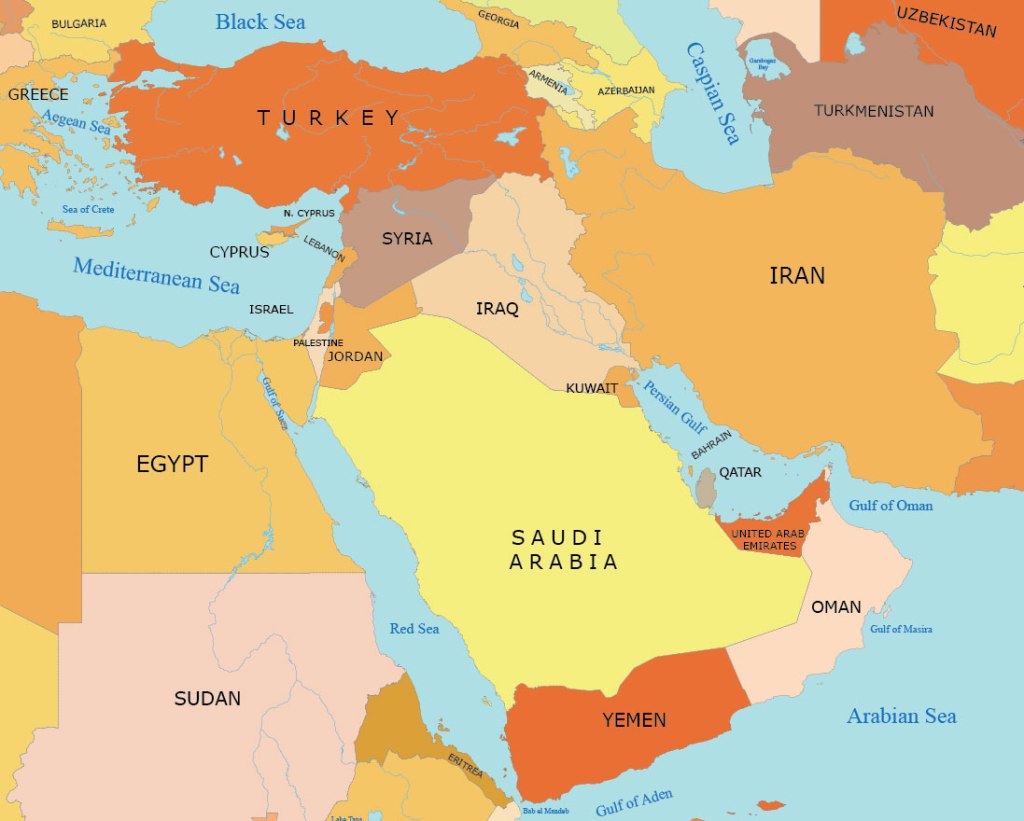
The volatility in the Middle East has escalated sharply following Hamas’s attack on Israel on October 7, 2023, and the ensuing war in Gaza. The conflict has since spilled over into Lebanon, with Israel invading Southern Lebanon in October 2024. This year, tensions deepened further as Israel and the United States launched strikes on Iran, prompting retaliatory attacks on Israel and an American base in Qatar. The situation reached new heights on September 9, when Israel attacked Qatar — a nation that had been mediating peace efforts between Israel and Palestine.
Although tensions among Israel, Palestine, and Lebanon are recurrent, the recent strikes on Iran and Qatar indicate an alarming escalation that could draw in the wider Middle East. At the same time, the global geopolitical climate has grown increasingly fragile. With countries such as the United Kingdom, France, and other European powers ramping up their military preparedness, there are growing fears that the two major ongoing wars — between Ukraine and Russia, and between Israel and Palestine — could spill over into broader confrontations.
For Sri Lanka, these developments are deeply concerning for two key reasons: the safety of Sri Lankan migrant workers across the Middle East, and the potential economic fallout from disrupted remittance flows.
Lessons from the Past: Unprepared in Times of Crisis
The Middle East hosts the largest share of Sri Lankan migrant workers, with the destination of approximately 78% of the total 297,656 departures for foreign employment in Sri Lanka in 2023 being a Middle East nation. A sudden escalation of conflict in the region could force Sri Lanka to repatriate tens of thousands of citizens within a short period. Unfortunately, past experiences show that the country has consistently struggled to respond effectively to such emergencies.
When Iraq invaded Kuwait in 1990, Sri Lanka faced its first major test in organising a mass repatriation. During this conflict, thousands of Sri Lankan migrant workers fled Kuwait, many crossing into Saudi Arabia with few or no belongings. Most were female domestic workers caught in the crossfire or abandoned by their employers. Between August 1990 and March 1991, eight Sri Lankans were killed and 32 were injured. Many also lost wages, documents, and possessions during the evacuation. The Sri Lankan mission in Saudi Arabia was overstretched, unable to meet the needs of thousands of displaced workers arriving from Kuwait. As a result, migrants were forced to rely on international interventions, including those organised by the International Organisation for Migration (IOM) and the Red Cross.
A similar situation unfolded in 2006 during the Israel–Hezbollah conflict in Lebanon, which trapped thousands of Sri Lankan migrant workers, particularly female domestic workers, who had limited access to evacuation information, as this was before the widespread use of social media for communication and updates. Some employers fled Lebanon, abandoning their workers without money or documents. On the other hand, migrant workers who had overstayed their visas or escaped abusive employment situations were stranded without legal status. As a result, Sri Lankan migrants queued outside the embassy for emergency travel documents. A few were evacuated by Indian naval vessels, while others made their way through Syria or Cyprus before being flown home. Once again, the Sri Lankan mission—this time in Beirut—struggled with limited resources and coordination, leaving many workers to self-organise or depend on humanitarian assistance.
Still Unprepared Decades Later
While Sri Lanka’s lack of readiness in 1990 may be understandable—given it was the country’s first experience with a large-scale evacuation—its continued unpreparedness in subsequent crises is far more concerning. Even during the COVID-19 pandemic, a crisis far less sudden or violent than war, the Sri Lankan government and its overseas missions in the Middle East struggled to coordinate the return of stranded migrant workers. The resulting delays and confusion underscored the absence of a coherent emergency repatriation framework, despite the nation’s long-standing dependence on foreign employment.
In contrast, other labour-sending countries offer valuable lessons. The Philippines’ repatriation effort during COVID-19 was among the largest in the world, involving more than one million overseas workers. It demonstrated the strength of the country’s institutional infrastructure—anchored by the Overseas Workers Welfare Administration (OWWA), the Department of Foreign Affairs (DFA), and the Philippine Overseas Employment Administration (POEA). Although challenges such as bureaucratic delays and uneven reintegration persisted, the Philippines’ well-coordinated system enabled a more structured and humane response than Sri Lanka’s.
For Sri Lanka, the lesson is clear: institutional readiness matters. A robust, well-coordinated network of state agencies and overseas missions can make the difference between chaos and a humane, organised repatriation.
The Economic Stakes
The urgency extends beyond humanitarian concerns. The Middle East remains Sri Lanka’s primary source of remittances, which are a vital lifeline for the national economy. In 2019, approximately 50% of remittances originated from the Middle East, with Kuwait, Saudi Arabia, Qatar, and the UAE among the top contributors. These inflows help ease the country’s chronic foreign exchange shortages and contribute more to GDP than several of Sri Lanka’s key export sectors, including tea and textiles.
Moreover, nearly one in four Sri Lankans in the labour force is employed overseas, the vast majority in the Middle East. A sudden mass repatriation would not only sever a crucial source of foreign income but also sharply increase domestic unemployment, adding further strain to an already fragile economy.
Preparing for the Unthinkable
Given that the Middle East remains a volatile yet indispensable labour migration corridor for Sri Lanka, proactive planning is no longer optional. The country must have contingency measures in place-from rapid repatriation logistics to social protection mechanisms for returnees- to avoid repeating past mistakes. To strengthen Sri Lanka’s preparedness for a potential Middle East conflict, the country needs:
- A comprehensive emergency repatriation plan, developed jointly by the Ministry of Foreign Affairs, the Sri Lanka Bureau of Foreign Employment (SLBFE), and other relevant authorities
- Enhanced coordination with host-country embassies, international organisations, and regional partners for safe evacuations
- Temporary reintegration and livelihood support for returnees to cushion the economic impact
In addition, Sri Lanka needs to diversify its foreign employment destinations beyond the Middle East. To some extent, the SLBFE has begun this process by signing bilateral labour agreements (BLAs) and Memoranda of Understanding (MoUs) with Japan, South Korea, and other non-Middle Eastern countries. However, Sri Lanka’s dependence on the Gulf remains overwhelming. Until the country diversifies both its labour destinations and remittance sources and develops credible crisis-response mechanisms, each new flare-up in the Middle East will continue to expose its economic and human vulnerabilities.
About the author
Anoji Ekanayake is a researcher based in Sri Lanka and Qatar with extensive experience in migration and displacement research. She earned her PhD from the University of Colombo, where her research focused on the return, reintegration, and remigration of Sri Lankan migrant workers from the Gulf region. Her scholarly contributions have been published in international journals, including Comparative Migration Studies (Springer), Refugee Survey Quarterly (Oxford Academic), and Migration and Development (Routledge). Currently, she serves as a Senior Researcher at the Centre for Migration Research and Development (CMRD). Before joining CMRD, Anoji was affiliated with the Gender, Justice and Security Hub at the London School of Economics and Political Science (LSE).
Date: 06 October 2025
 The Migrant